

Cider Harvest Festival Guide: How to Taste Cider | Jan’s Blog
How to Taste Cider: A Simple Cider Tasting Guide
Taste cider in the orchard where it begins
The 8th Annual Cider Festival at Merridale is more than a chance to drink good cider.
It is the beginning of our harvest season.
On September 27, the orchard is beginning to tell its next story. The apples that will become future ciders are hanging on the trees around you, while in your glass you’ll be tasting cider made from an earlier harvest.
You’ll be tasting last year’s cider while sitting among the trees that are becoming next year’s cider.
GET TICKETS →
That makes the orchard a pretty special place to learn about cider.
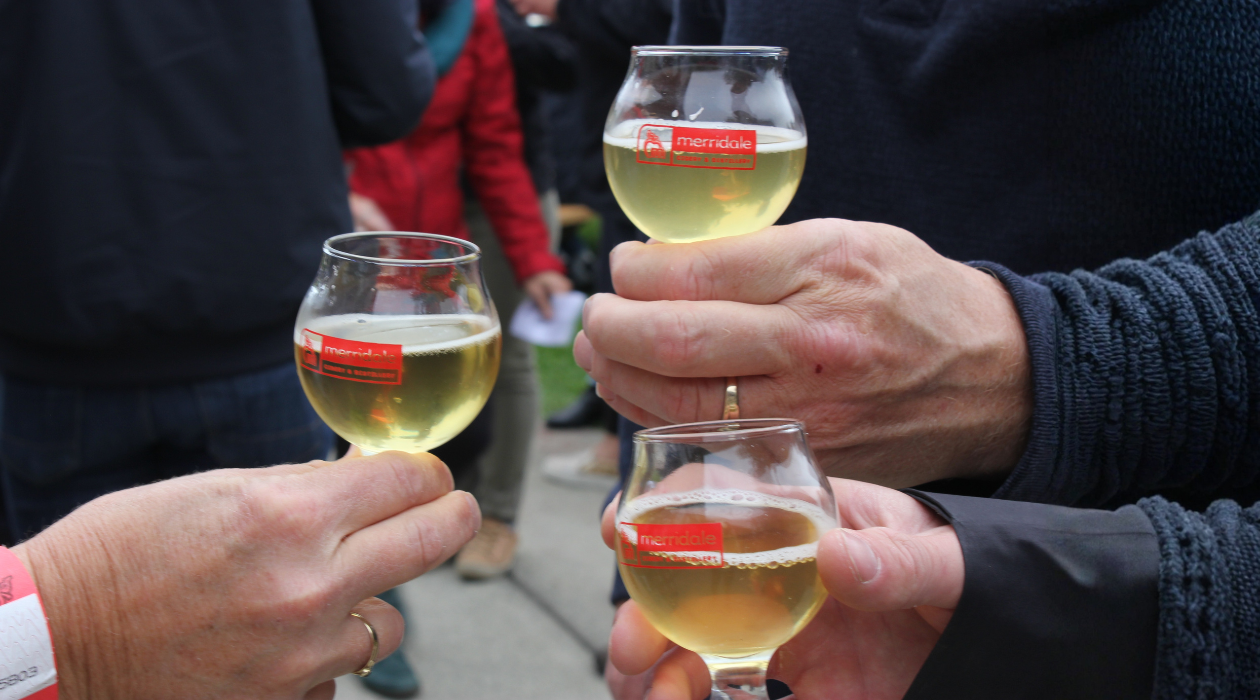
At the festival, you’ll taste ciders from different makers, made with different apples and different approaches to fermentation. You can simply enjoy them, or slow down and discover what makes each one different.
You don’t need to be a cider expert. A few simple tasting tips can help you notice much more in your glass.
For today, let’s keep it simple.
1. Look at the cider
Start with your eyes.
Hold your glass up. Is the cider pale and golden, amber or somewhere in between? Is it clear, hazy or cloudy? Still or sparkling?
Appearance can give you your first clues about how a cider was made. A clear cider may have been filtered or clarified. Haze can come from less filtration, remaining yeast, fruit juice or other ingredients.
Hazy doesn’t necessarily mean better or worse. It tells you something about the cider.
At the festival, ask the maker: “Why is this cider hazy?”
Was it intentionally left unfiltered? Was fruit added? What did the maker want the cider to look and taste like?
That’s part of the fun of a cider festival. You aren’t just tasting the cider; you can ask the person who made it why it’s the way it is.
Then look at the bubbles. Is it gently sparkling or highly carbonated? Bright and lively, or quiet in the glass?
That’s your first impression, but there’s much more to discover.
2. Smell the cider before you taste it
Here’s a cider-tasting secret that surprises a lot of people:
Much of what you think of as taste actually comes from your sense of smell.
Before you take a sip, bring the glass to your nose and take a couple of gentle breaths.
What do you notice?
Maybe fresh apple, pear, citrus, flowers, honey or spice. Perhaps something earthy, herbal or even a little funky.
There isn’t necessarily a right answer. Your brain connects aromas with memories and experiences.
And cider won’t necessarily smell like the sweet apple you eat at lunch.
Cider apples are different →
Traditional cider apples can bring acidity, tannin, bitterness and complex aromas to the finished cider.
That’s one reason two ciders made from different apples can taste remarkably different.
The apple is the beginning of the story.
3. Taste the cider
Now take a sip.
This time, don’t just decide whether you like it. Pay attention to what your mouth is telling you.
As you taste, notice a few key things:
Sweetness gives cider softness and fruitiness and can come from sugars remaining after fermentation.
Acidity gives cider freshness, brightness and that mouth-watering quality that makes you want another sip.
Bitterness can come from the apples themselves and is particularly noticeable in some traditional cider varieties.
And then there’s tannin.
Tannin creates a drying, slightly grippy sensation in your mouth, similar to strong tea or red wine. Traditional cider apples can contain significant tannins, adding structure and complexity to the finished cider.
Together, taste, aroma, acidity, tannin, texture and mouthfeel create what we experience as flavour.
4. Notice the texture and finish
Let the cider sit in your mouth for a moment.
Does it feel light and delicate? Round and full? Crisp and lively?
If it’s sparkling, how does the carbonation change the experience?
Then swallow and wait.
What remains?
This is the finish, the flavours and sensations that linger after you’ve swallowed.
Some ciders disappear quickly. Others continue to develop, leaving apple, spice, tannin, acidity or other flavours behind.
5. Think about the balance
Three characteristics are particularly useful when tasting cider:
Sweetness. Acidity. Tannin.
Sweetness gives softness and fruitiness. Acidity provides freshness and brightness. Tannin adds structure and that drying or slightly grippy sensation.
None is automatically better than another.
The interesting part is how they work together.
A cider can be dry but still fruity. It can have noticeable acidity without simply tasting sour. Tannin can add structure without making a cider unpleasantly bitter.
You’re looking for balance, not a scorecard.
6. Taste ciders beside each other
This is where a cider festival gets especially interesting.
Instead of tasting one cider and deciding whether it’s “good,” taste several and compare them.
Which is drier? Which has more acidity or tannin? Which has the most interesting aroma? Which has the longest finish? Which would you choose with food?
And which one would you happily sit beneath an apple tree and sip on its own?
Comparison helps your palate learn.
At the 8th Annual Cider Festival, you’ll have plenty to compare.
Different apples. Different orchards. Different makers. Different fermentation methods. Different ideas about what cider can be.
And you’ll be tasting alongside the people who actually make it.
Ask questions. Why did they choose those apples? Why is the cider hazy? Where does the tannin come from? What makes this one different?
7. There is no right answer
This may be the most important cider-tasting tip of all.
You don’t have to like what someone else likes.
One person might love a bone-dry cider with lots of tannin. Someone else might prefer something bright, fruity and refreshing.
Your job isn’t to find the “best” cider.
Your job is to discover what you like.
Pay attention to the aromas, tastes and textures you enjoy, and you’ll gradually get better at choosing ciders you’ll love.
That’s what cider education should do. Not tell you what to like, but give you the tools to understand what you’re tasting.
8. Then look around you
This is the part you can only really understand when you’re tasting cider in an orchard.
Look up from your glass.
The cider you’re drinking came from a harvest that happened months ago. Around you, another harvest is developing right now.
The fruit on those trees will be pressed, fermented and transformed. Some of it will eventually become cider you’ll taste in the years ahead.
That’s the remarkable thing about orchard cider.
It connects a glass of cider to a place, a season, an apple and a year.
And at Merridale, we think that’s worth paying attention to.
Come taste cider in the orchard
The 8th Annual Cider Festival is our invitation to experience cider this way.
Taste ciders from different makers. Meet the people behind them. Enjoy local food and music. Spend an autumn day in the orchard as harvest begins.
And put what you’ve just learned into practice.
Look at the cider. Smell it. Taste it. Notice the sweetness, acidity, tannin and texture. Pay attention to the finish. Ask questions.
Then look up at the trees around you.
You’re tasting the story of one harvest while standing among the trees creating the next one.
You don’t need to know all the right tasting words.
Just take a sip, slow down and see what you discover.
We’ll see you in the orchard.

Cider Tasting FAQs
How do you properly taste cider?
Start by looking at the cider, then smell it before taking your first sip. As you taste, pay attention to sweetness, acidity, tannin, texture and the finish. Most importantly, take your time. There’s no single “right” way to enjoy cider.
Should you smell cider before tasting it?
Yes. Aroma is a big part of how we experience flavour. Before taking a sip, smell the cider and see what you notice. You might find apple, citrus, floral, spice, earthy or other aromas depending on the cider.
What is tannin in cider? →
Tannin is the drying or slightly grippy sensation you may notice in your mouth, similar to strong tea or red wine. Some traditional cider apples naturally contain higher levels of tannin, which can give cider more structure and complexity.
Is cloudy or hazy cider bad?
Not necessarily. A cider may be hazy because it is less filtered, contains remaining yeast or includes fruit or other ingredients. If you’re tasting directly with a cider maker, ask them why their cider looks the way it does.
How can I learn more about tasting cider?
Once you’ve mastered the basics, read our How to Taste Cider Like a Pro → guide for a deeper look at cider tasting, aroma, flavour and what’s happening in your glass.
Share this article
Follow us
Latest articles
October 18, 2026
October 18, 2026
October 18, 2026